
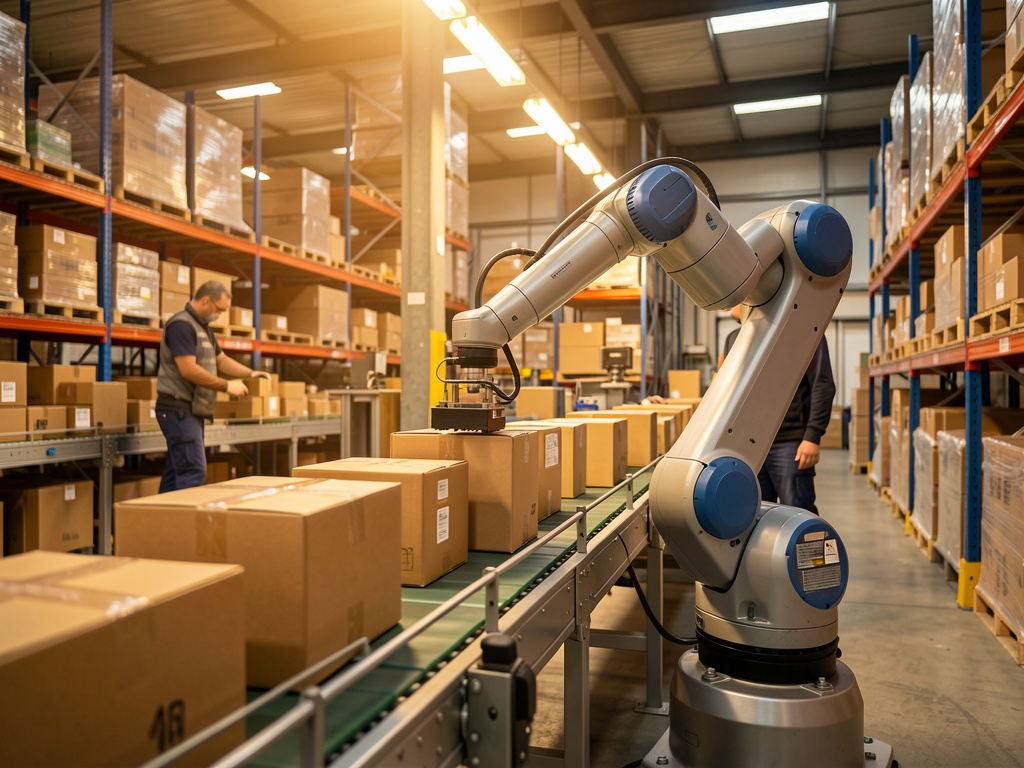
Automation vendors used to sell warehouse robots as finished products. The pitch has changed. The systems gaining traction now are the ones that improve after every awkward fumble on the belt.
When a gripper misreads a soft package or a reflective bag, a human steps in. That correction — camera frames, force readings, the successful grasp that followed — goes into a nightly training loop. By morning, similar items fail less often.
Operators in Auckland and Sydney distribution centres say the first fortnight is still clumsy. Week four is when managers notice fewer stoppages. The gains aren’t cinematic; they’re five to twelve percent fewer interventions per shift, which adds up across a network.
There’s a cultural shift too. Floor staff aren’t being replaced so much as turned into teachers. The companies that explain that clearly keep retention. The ones that don’t get quiet resistance and “mysterious” downtime.
The overnight learning loop only works when corrections are clean. A rushed “just push it through” click teaches the model the wrong lesson.
| Signal | What operators watch | Why it matters |
|---|---|---|
| Intervention rate | Fixes per 100 picks | Shows whether learning sticks |
| SKU clusters | Items that keep failing | Hints at perception gaps |
| Cycle time | Seconds per successful grasp | Connects AI to throughput |
Warehouses that review those numbers in the same meeting as safety incidents treat robots as colleagues with training needs — not magic boxes.
None of this arrives as a clean discontinuity. It shows up as slightly different meetings, slightly different checklists, and a few people who quietly stop doing the old workaround because the new path finally hurts less.
Seen up close, the pattern is less about breakthrough theatre and more about quieter competence: fewer surprises, clearer owners, and tools that survive contact with Tuesday afternoon.