
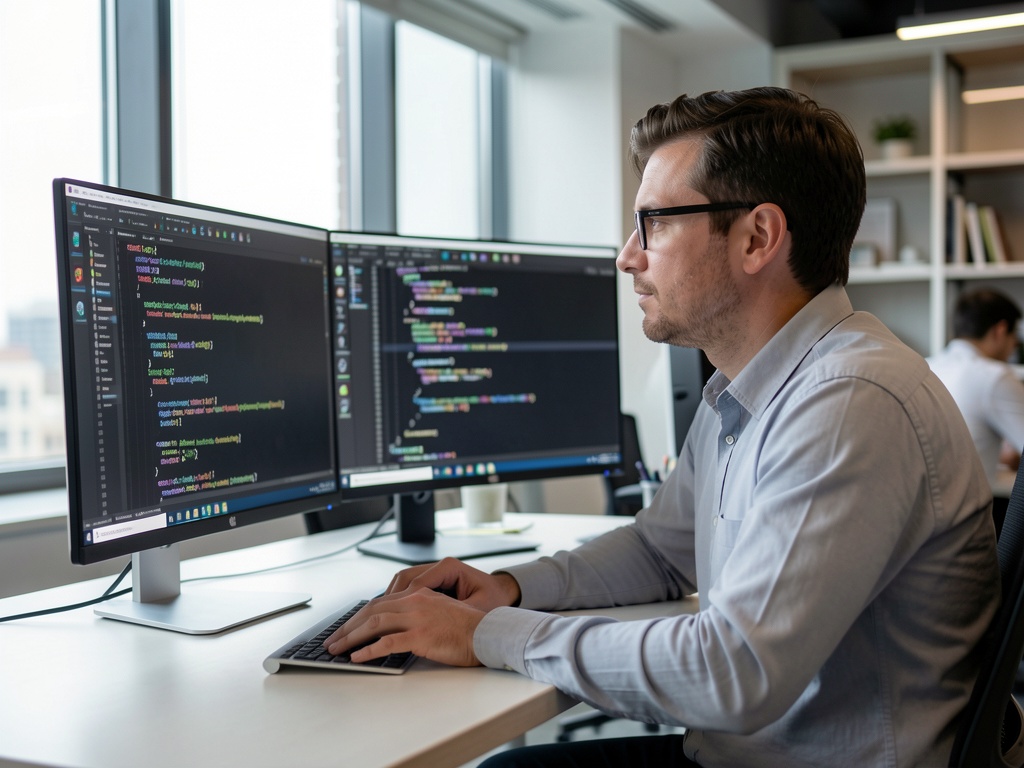
Ask a junior engineer how they spend mornings now and you’ll hear less “wrestling boilerplate” and more “checking what the model just proposed.” AI copilots draft the first pass; humans decide whether it belongs in production.
That shift worries educators and thrills managers. The worry: fewer reps writing code from scratch. The thrill: faster delivery if seniors mentor judgment instead of syntax.
Healthy teams treat copilots like power tools with kickback. Code review gets stricter, not looser. Tests become non-negotiable. Juniors who lean only on autocomplete stall; those who interrogate every suggestion grow faster than the old path allowed.
The job isn’t disappearing. It’s shedding the parts that were never the point of hiring a curious person in the first place.
Junior workflows are splitting into two skills: prompting for a draft, then defending every line in review.
- Require tests before merging copilot-heavy changes.
- Ask juniors to explain trade-offs, not just paste diffs.
- Rotate “no-copilot” days so fundamentals don’t atrophy.
- Reward curiosity about failures, not speed alone.
Teams that do this grow engineers. Teams that don’t grow autocomplete operators.
None of this arrives as a clean discontinuity. It shows up as slightly different meetings, slightly different checklists, and a few people who quietly stop doing the old workaround because the new path finally hurts less.
Seen up close, the pattern is less about breakthrough theatre and more about quieter competence: fewer surprises, clearer owners, and tools that survive contact with Tuesday afternoon.