
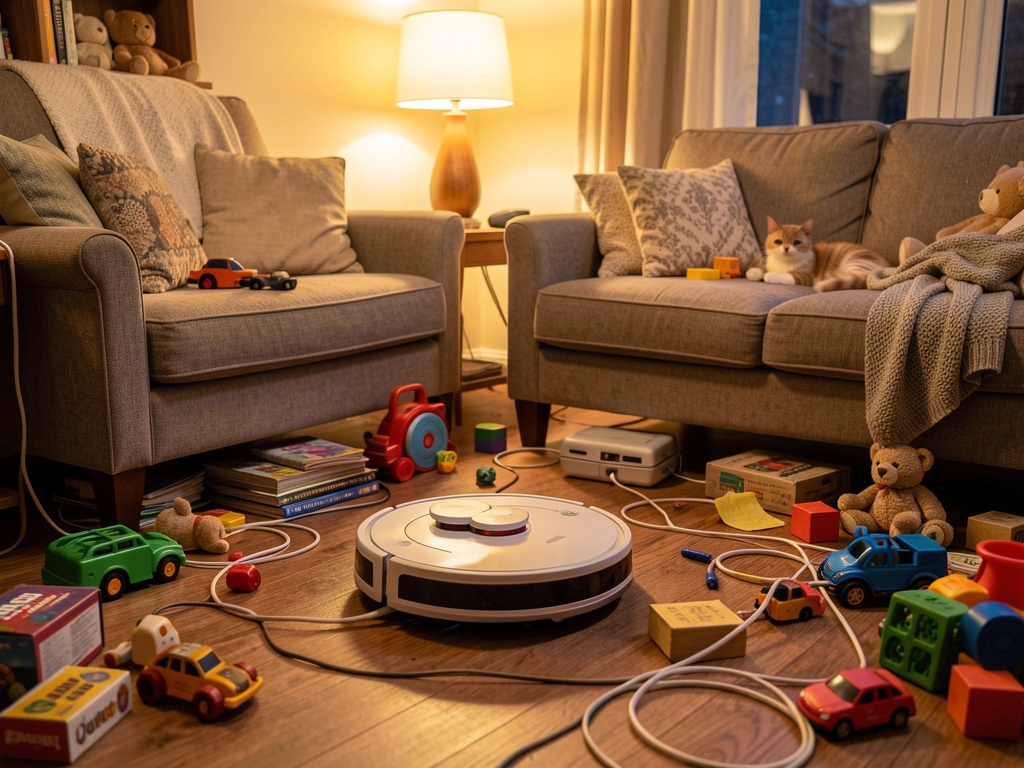
Consumer robotics ads love empty Scandinavian living rooms. Real houses have backpacks, cables, and that one chair nobody puts away. That gap is still the industry’s quiet embarrassment.
Latest household robots map floors beautifully and then hesitate in doorways choked with laundry. Some ask for help; others invent creative routes that knock over plants. Engineers know the problem is semantics as much as sensors — what counts as an obstacle versus something to nudge?
Companies are shipping “supervised autonomy” modes that sound like marketing speak and feel like honesty. The robot handles clear zones; humans clear the chaos first.
Until clutter is a solved class of perception, the killer app may remain the boring one: vacuuming the open floor while you sleep, then waiting politely when life spills into the hallway.
Household robotics still fails the “life happens” test. The fix isn’t only better SLAM — it’s honesty about supervision.
| Home zone | Autonomy today | Practical tip |
|---|---|---|
| Open floors | Strong | Run while you’re out |
| Doorways | Uneven | Clear cables first |
| Kids’ rooms | Weak | Treat as supervised |
Until clutter is a first-class perception problem, the best products will ask for help without shame.
None of this arrives as a clean discontinuity. It shows up as slightly different meetings, slightly different checklists, and a few people who quietly stop doing the old workaround because the new path finally hurts less.
Seen up close, the pattern is less about breakthrough theatre and more about quieter competence: fewer surprises, clearer owners, and tools that survive contact with Tuesday afternoon.
Seen up close, the pattern is less about breakthrough theatre and more about quieter competence: fewer surprises, clearer owners, and tools that survive contact with Tuesday afternoon.